
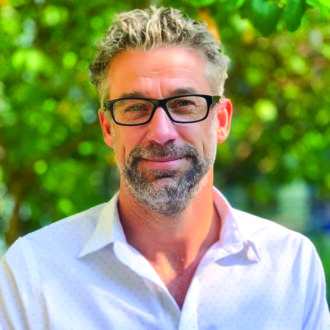
Andrew Judge, Ph.D.
Professor of Physical Therapy and Associate Director for Training for the Myology Institute
College of Public Health and Health Professions
Andrew Judge concentrates his research on cancer cachexia, a serious condition of significant weight loss and muscle loss that occurs in many people with cancer. Up to 50% of patients with cancer will experience cachexia, with the incidence rising to 80% of patients who have advanced-stage disease. In patients with cancer cachexia, the body breaks down muscle and other tissue to provide nutrients for tumor growth or to activate immune cell function. Cachexia makes people feel very weak and tired, making daily activities challenging and cancer treatments more difficult to tolerate.
Judge currently leads three studies funded by the National Institutes of Health and the Florida Department of Health examining the molecular mechanisms contributing to cancer cachexia, the impact of skeletal muscle tissue loss on health outcomes among patients with cancer and potential treatments to combat cachexia.
“Dr. Judge is internationally recognized in the cancer cachexia community as a stellar scientist and he works tirelessly to further research in this area and support the mentorship and training of young scientists,” said Krista Vandenborne, chair of the Department of Physical Therapy.
Based on extensive studies of the blood and muscles of people with pancreatic cancer, Judge and his team published groundbreaking results that challenged the conventional wisdom of how cachexia affects muscles.
“Until we conducted and published these studies, dogma in the field was that muscles became smaller and weaker but displayed no other overt pathologies,” said Judge. “Our studies completely changed that thought process by demonstrating that muscles from cancer patients show evidence of immune cell infiltration and replacement of muscle tissue with collagen and fat.”
This new understanding has led scientists to study treatments for cancer cachexia that also target inflammation and muscle fibrosis.
Judge is in demand as a presenter at national and international conferences. He has also played a leading role in seven international conferences held on the UF campus. He will close out his two-year term as president of the Cancer Cachexia Society this fall by serving as the lead organizer of the 2025 Cancer Cachexia Conference in Torino, Italy.
Judge is a member of the UF Health Cancer Center. He also serves as the director of the college’s Ph.D. program in rehabilitation science and as the associate director of training for the UF Myology Institute.