
Author: Dan Ypsilanti

Angelos Barmpoutis, Ph.D.
June 2, 2026Angelos Barmpoutis is an associate professor of digital arts and sciences and coordinator of research and technology at the UF Digital Worlds Institute, a partnership between the university’s College of the Arts, Herbert Wertheim College of Engineering and the College of Journalism and Communications. Barmpoutis, who earned his Ph.D. in computer engineering from UF, focuses his research on collaborating with specialists around the world to apply cutting-edge technology and cross-disciplinary expertise to solve global problems.

Elisabeth Barton, Ph.D.
June 2, 2026Elisabeth Barton, molecular physiologist and professor in the Department of Applied Physiology and Kinesiology, studies how cellular interactions and genetics can influence muscle function. She specializes in understanding how muscle tissue repairs itself, and her findings shed light on how the process can be accelerated.

Donald Behringer, Ph.D.
June 2, 2026Donald Behringer, professor in the School of Forest Resources and Conservation‘s Fisheries and Aquatic Sciences Program, is a marine ecologist specializing in how diseases impact aquatic communities. By understanding the distribution and spread of marine and freshwater diseases, including the role human activity can play in their emergence, Behringer hopes to shed light on how their spread and severity can be mitigated.
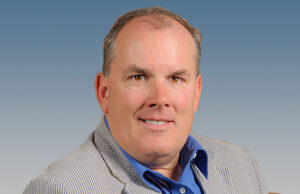
James F. Collins, Ph.D.
June 2, 2026James F. Collins, professor in the Food Science and Human Nutrition Department, studies how the human body absorbs iron and copper – key minerals in the body’s cells – from food and supplements. By modeling intestinal nutrient transport in rodents, Collins hopes to develop new nutritional approaches to mitigate mineral imbalances in humans.
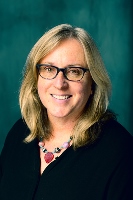
Mary Ellen Davey, Ph.D.
June 2, 2026Mary Ellen Davey, an associate professor of oral biology at UF’s College of Dentistry, studies the complex assembly of cellular organisms living in the human mouth. Known as the oral microbiome, these cellular communities play a key role in oral health. But shifts in their composition can allow pathogens to dominate an otherwise-healthy oral microbiome, which can result in tissue and bone damage from gum diseases.

Jamie Ellis, Ph.D.
June 2, 2026Jamie Ellis, professor in UF’s Department of Entomology and Nematology, is a beekeeper-scientist, using a network of scientific disciplines as a lens to zoom in on bee biology, ecology and behavior. In his role as founding director of the Honey Bee Research and Extension Lab, also known as HBREL, in UF’s Institute of Food and Agricultural Science, Ellis oversees a team of more than 20 researchers, students and bee experts. The facility, a $4.5-million teaching, extension and research space completed in 2018, features a hive observation room, a honey processing facility and a collection of hives for teaching and research.

James Essegbey, Ph.D.
June 2, 2026Linguist James Essegbey documents highly endangered languages – sometimes with little more than a dozen living speakers – to preserve irreplaceable world perspectives. A professor of African language and linguistics, he focuses on working with West African communities to help leaders preserve their language and cultural knowledge.

Abigail Fagan, Ph. D.
June 2, 2026Abigail Fagan, professor of criminology and law, specializes in prevention science, an interdisciplinary field that helps promote public wellbeing by using scientific advances to prevent behavioral and health problems. As a sociologist and criminologist, she studies how communities can prevent crime by addressing factors that drive criminal behavior in young people, including how traditional gender roles contribute to the gap between male and female criminal involvement. But there’s no one-size-fits-all strategy – Fagan said empowering communities to determine their priorities and work towards individualized goals is key to long-term reductions in crime.

Robert Guralnick, Ph.D.
June 2, 2026Florida Museum of Natural History scientist Robert Guralnick’s work focuses on answering pressing questions about life on earth from an interdisciplinary perspective. As the museum’s curator of biodiversity informatics, Guralnick synthesizes data from vast museum collections to help scientists understand changes in biodiversity over space and time.

James Hamlin, Ph.D.
June 2, 2026James Hamlin, an associate professor of physics, said he knew he was hooked on physics when he took his first laboratory course as an undergraduate at Washington University in St. Louis.